
How Much Does Pier and Beam Foundation Repair Cost?
Last updated: September 10, 2026
Key Takeaways
- Wait 6 months, and a manageable repair can turn larger.
- That is how they end up comparing a $4,800 estimate that excludes drainage work with a $7,200 estimate that includes it.
- A small stabilization job may land around $2,000 to $5,000. Bigger repairs often run $6,000 to $15,000 or more.
- A 1,500-square-foot bungalow with three rotten beams can cost more to fix than a larger house with one settled corner.
Pier and beam foundation repair usually costs a few thousand dollars for a limited fix. But it can climb into five figures when a house in Dallas, Fort Worth, Austin, San Antonio, or Houston needs leveling, beam replacement, crawlspace work, and drainage correction. Price tags do not stay neat here. They hinge on how many piers are failing, whether the joists and beams are still sound, and whether the crawl space has chronic moisture, rot, or termite damage.
What does pier and beam foundation repair cost in Texas?
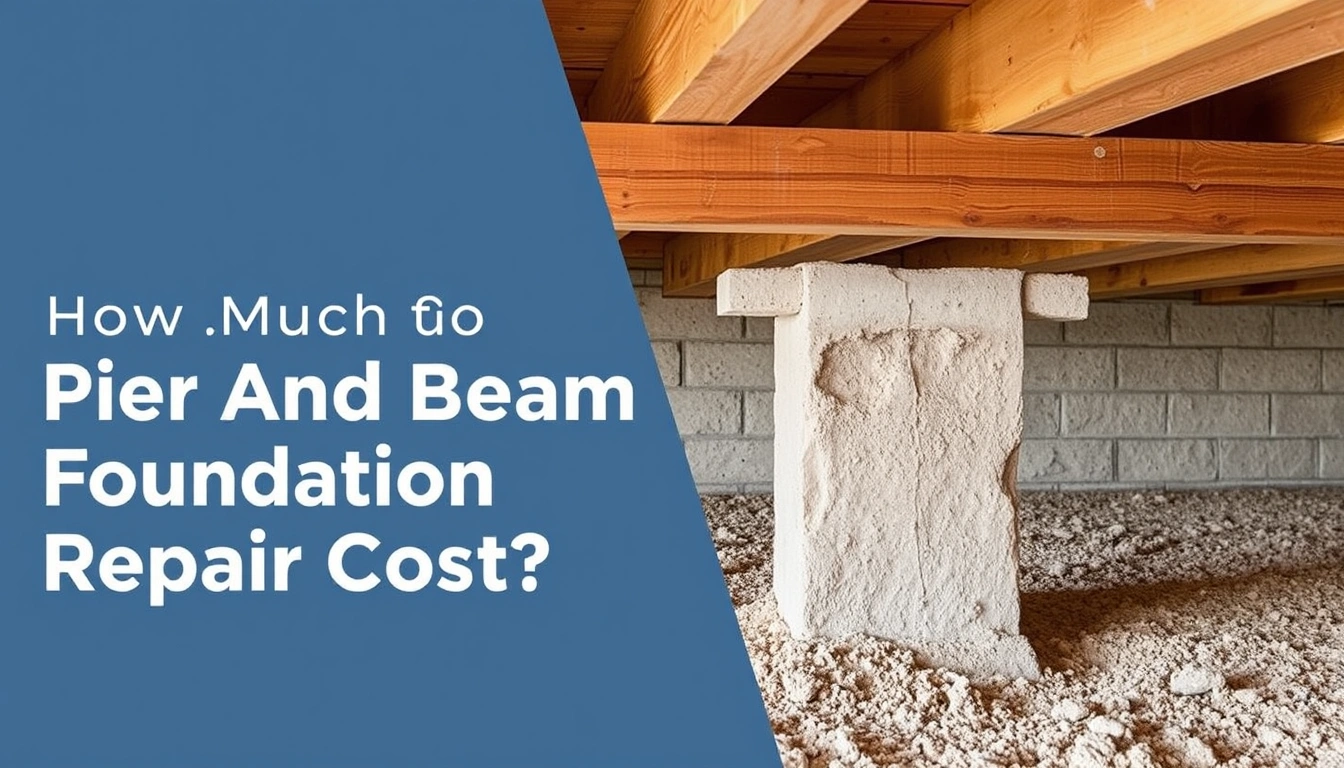
Pier and beam foundation repair in Texas commonly falls in a wide range because the word “repair” can mean anything from shimming a low corner to rebuilding part of the frame under a whole house. A small stabilization job may land around $2,000 to $5,000, while more involved repairs often run $6,000 to $15,000 or more. Need major beam replacement, many new piers, or drainage correction? The total can move well beyond that.
Here is the practical way to think about it in a market like North Texas, Central Texas, or the Gulf Coast:
| Repair scope | Typical cost range | What it usually covers |
|---|---|---|
| Minor adjustment | $500–$2,000 | Shimming a few piers, tightening supports, small leveling corrections |
| Moderate repair | $2,000–$6,000 | Several new piers, beam repair, isolated joist fixes, limited crawlspace work |
| Major repair | $6,000–$15,000+ | Multiple sections of failed supports, sagging beams, drainage fixes, moisture damage repair |
| Extensive structural work | $15,000+ | Large portions of the subfloor, beams, and support system, often with multiple trades involved |
Those ranges are not a quote; they are the kind of numbers a homeowner might hear after an on-site inspection in places like Plano, Richardson, Arlington, Round Rock, League City, or the older neighborhoods of San Antonio where crawlspaces and pier systems vary a lot from house to house.
A generic article gets this wrong by pretending house size is the main driver. It is not. Failure pattern matters more. A 1,500-square-foot bungalow with three rotten beams can cost more to fix than a larger house with one settled corner.
Why is pier and beam foundation repair so variable?
Pier and beam foundation repair is variable because the structure sits on a series of supports, and each support can fail for a different reason. In older homes across Dallas, East Dallas, Oak Cliff, Fort Worth’s older neighborhoods, and central Austin, I usually think in terms of four cost drivers: access, damage, moisture, and finish work.
Access comes first. A crawl space with 18 to 24 inches of clearance is slower and more labor-heavy than one with 30 to 36 inches. If the crew has to work around ducting, plumbing, or low-clearance additions, labor time increases. Tight access also forces more hand work instead of equipment-assisted work. Slow, awkward, fiddly. That is the reality.
Damage is next. A pier that needs shimming is not the same as a beam that has rotted through near a pier line. If floor joists have sagged, cracked, or been cut for plumbing, the repair becomes structural carpentry, not just foundation adjustment.
Moisture matters in Houston, Galveston-area conditions, and other humid parts of the state. A crawl space with standing water, poor grading, or chronic humidity can keep causing problems after the foundation work is done unless drainage and ventilation are addressed. That is one reason a cheap quote can become an expensive repeat visit.
Finish work counts too. If the home has plaster cracks, tile damage, stuck doors, or cabinet separation, those items may be repaired separately. Some foundation contractors include only structural correction, not cosmetic restoration.
I would be cautious with any quote that sounds neat and tidy for a pier and beam house in the clay-heavy Texas markets around Dallas-Fort Worth or the expansive soils common in Central Texas. Those soils move with moisture, and the structure often tells a longer story than a single crack in the wall. One crack is rarely the whole plot.
What changes the price in Dallas, Austin, Houston, and San Antonio?

The price changes because the soil, moisture, and house age are different in each metro, and those differences affect the amount of work under the house. Expansive clay in much of North Texas, rocky or mixed soils in parts of Austin and San Antonio, and humidity plus drainage problems in Houston all push the job in different directions.
Dallas and Fort Worth see many pier and beam jobs that involve settlement from soil movement and age-related wear in older homes. That often means more time spent re-leveling, replacing failing supports, and checking for cracked brick veneer or interior separation.
Austin can be a different animal. In older neighborhoods and on properties with slope or drainage issues, the job often becomes a moisture-and-structure problem at the same time. If water runs toward the foundation after a 1-inch rain, the repair quote may need to include grading or drainage corrections, not just new piers.
Houston crawlspaces often tell the story first. High humidity, poor air movement, and drainage trouble can create soft subfloors, mold concerns, and wood rot. That does not automatically mean a dramatically higher repair bill, but it does mean more inspection time and more line items. Mud pie stuff, basically.
San Antonio older pier and beam homes may have a mix of settlement and aging framing. Some areas also deal with caliche, variable fill, or patchwork repairs from previous owners. That creates uncertainty, and uncertainty costs money.
Permit and code rules also matter. In many Texas cities, structural repair work can require permits if the work is substantial or alters structural members, and local building departments may want plans or inspections. The exact threshold varies by city and scope, so ask the contractor who will pull the permit and whether the price includes it. For broader guidance, the International Code Council and your city building department are the right references, not a guess at the kitchen table.
How do I know if I’m paying for the right pier and beam repair?
You know you are paying for the right repair when the estimate names the actual failure, not just the symptom. A solid bid usually identifies how many piers need work, which beams or joists are damaged, whether the subfloor needs replacement, and whether moisture or drainage problems must be corrected for the repair to hold.
A quote that says only “level house” is too vague for a pier and beam foundation in places like Plano, New Braunfels, Pasadena, or the older parts of Fort Worth. I would want to see at least these specifics, and it is smart to review them with a qualified foundation professional or structural engineer if the damage looks serious:
- Number of piers to be installed, adjusted, or replaced
- Whether the supports are concrete, steel, or treated lumber
- Which beams are being repaired or replaced
- Whether floor joists or subfloor panels are included
- Whether crawlspace access, debris removal, or vapor barrier work is included
- Whether the estimate covers a post-repair inspection or recheck, often 30 to 90 days later
Very low price? Watch the fine print. If moisture correction is missing, that can be a false bargain. In a crawlspace with standing water or high humidity, wood damage may return. If the company says the job is “just cosmetic” but your doors are binding, the floors slope, and the trim is separating, I would treat that as a warning sign and ask for an independent inspection.
I am also wary of any repair proposal that does not say how leveling will be verified. A reputable structural repair firm should be able to explain its method in plain language, often using a level, elevation map, or laser-based measurement. You do not need jargon; you need a clear plan. Plain and simple.
For standards and consumer guidance, the American Society of Civil Engineers and the International Code Council are better places to anchor your questions than social media advice. If the repair involves significant structural distress, a licensed structural engineer’s evaluation is worth the added fee.
When is pier and beam foundation repair cheapest in Texas?
Pier and beam foundation repair is usually cheapest when you catch the problem early and schedule before the damage spreads. Small repairs in spring or fall are often easier to manage because the crawlspace is less miserable to work in, and the house is less likely to be dealing with extreme heat or saturated ground conditions.
In Texas, timing often looks like this:
- Spring: good for inspection after winter soil movement and before summer heat
- Summer: workable, but crawlspaces in Houston, Dallas, and San Antonio can be hot and slow the job
- Fall: often a good window for corrections before heavy rain patterns or winter swings
- After major rain: often the worst time to wait, because standing water or soil heave can keep changing the structure
Big oak trees in Austin or older drainage systems in Dallas and Fort Worth can make the season matter even more. New cracks, sloping floors, or sticking doors show up after weather shifts. And then the clock starts. Wait 6 months, and a manageable repair can turn into a larger one.
The cheapest time is not when the contractor is least busy; it is when the damage is still limited. A beam that needs a section repaired today can become a beam replacement plus subfloor repair next season.
What should a good pier and beam contractor include in the estimate?
A good pier and beam estimate should include the scope, the method, the materials, and the limits of the work. If it does not, I would keep shopping. In Texas, where older homes in neighborhoods like Lakewood, Heights-area Houston, Alamo Heights, or central Austin often have mixed-era repairs, vague estimates are a setup for dispute.
At minimum, I would expect the written estimate to state:
- The number and type of supports to be repaired or installed
- The type of beam material, such as treated lumber or engineered structural members
- Whether the crawlspace needs excavation or access enlargement
- Whether plumbing disconnection and reconnection is included
- Whether broken subfloor sections are included
- Whether the work includes cleanup and haul-off
- Whether a permit is included, if required by the city
- Whether the company offers a transferable warranty, and what that warranty actually covers
I would also want the company to explain what it will not fix. That sounds negative, but it saves money and arguments. For example, a structural repair crew may not handle mold remediation, flooring replacement, or drywall patching. If those are necessary, you need to budget separately.
Many homeowners skip this part because they want the fastest yes. That is how they end up comparing a $4,800 estimate that excludes drainage work with a $7,200 estimate that includes it. The lower number is not automatically the better deal.
How do I compare emergency, same-day, and free estimates?
Emergency service is for active structural distress, same-day service is for urgent inspection, and a free estimate is useful only if it is detailed enough to trust. If a floor suddenly drops, a door frame separates fast, or you see obvious pier failure after a storm in Houston, Dallas, or San Antonio, emergency response matters more than saving a few hundred dollars on inspection.
Same-day or next-day inspection can be valuable when you need to know whether the issue is safe to live with for the moment. In practical terms, that means a contractor or engineer can assess the home within 24 hours, tell you whether to vacate a room, and give you a short-term plan.
A free estimate is not always enough by itself. I would treat it as a starting point if it is backed by a crawlspace inspection and a written scope. If the house is older than 30 or 40 years, or if you already see sagging floors and separating trim, a paid structural evaluation may be the better first move because it is more likely to separate foundation work from framing or moisture problems.
Here is the honest trade-off: a cheap or free quote can save money up front, but it can also miss the real failure under the house. That is a bad fit for homeowners who want certainty before spending. So, if the damage is significant, compare the estimate with guidance from a licensed engineer or other qualified professional.
FAQ: How Much Does Pier and Beam Foundation Repair Cost?
Pier and beam foundation repair costs vary by scope, but a limited fix may cost a few thousand dollars while major structural work can run into five figures. In Texas, the final price depends on the number of failing supports, crawlspace access, moisture damage, and whether drainage corrections are needed.
Can pier and beam repair be done in one day?
Sometimes, yes, if the job is small, accessible, and limited to a few supports or minor leveling work. Larger jobs in Dallas, Austin, Houston, or San Antonio usually take multiple days, and extensive beam or subfloor work can take longer.
Do I need a permit for pier and beam foundation repair in Texas?
Often yes for substantial structural work, but the exact requirement depends on the city and the scope. I would ask the contractor to confirm permit responsibility before you sign.
Is free foundation repair inspection worth it?
It can be, if the inspector gives you a written scope and explains the difference between leveling, support replacement, and moisture-related damage. If the inspection is just a sales pitch, it is not enough.
What is the biggest red flag in a quote?
The biggest red flag is a vague quote that promises to “fix the foundation” without naming the number of piers, the beam work, or the moisture issues that caused the problem.
Should I get an engineer involved?
Yes, if the damage looks serious, if the house has repeated movement, or if you need an independent opinion before approving a large repair. A licensed structural engineer is especially useful when a home in a clay-soil area keeps settling after previous work.