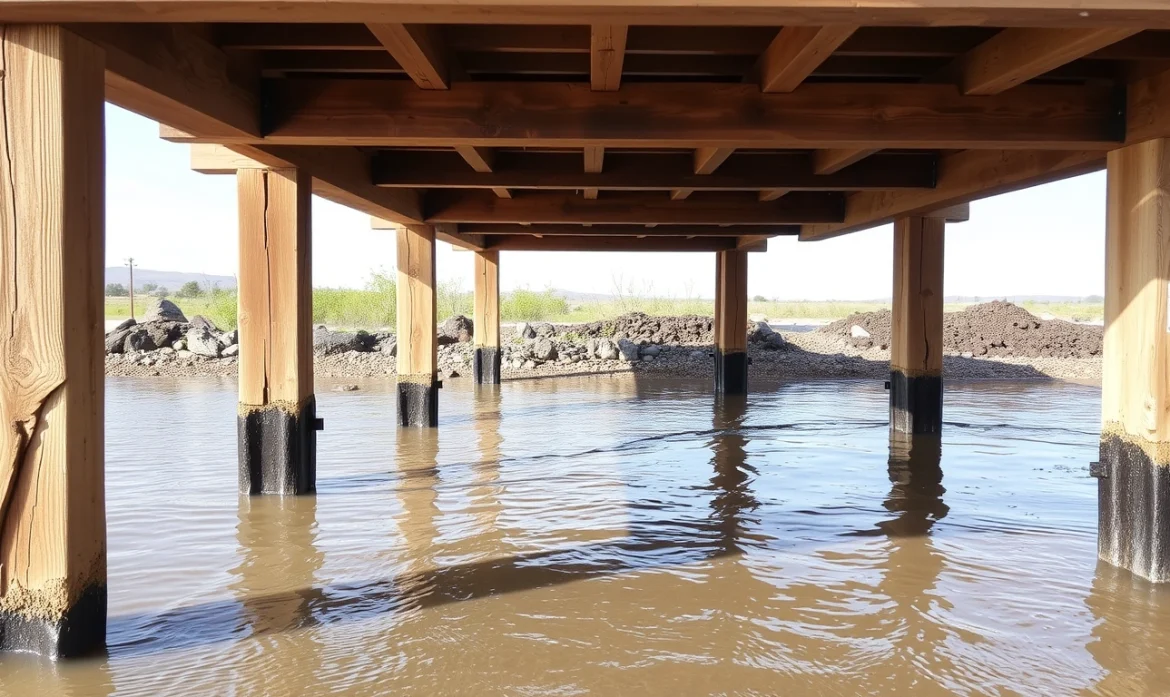
How to Fix Standing Water Under a Pier and Beam House
Last updated: September 10, 2026
Key Takeaways
- In many cases, 4 to 10 feet of extension is enough to reduce splash and ponding.
- A crawl space with 18 inches of clearance is a different job from one with 30 to 36 inches of access and clear working room.
- You should stop adding water, get the area safe, and find the source before you pump anything out.
- Start with the quickest checks you can safely make, including failed sprinkler zones near the foundation if they are present.
Standing water under a pier and beam house is usually a drainage problem. Not a “wait and see” situation. The fix is to move water away from the crawl space, stop new water from getting in, and then dry and repair what the moisture has already damaged. Want a broader view of house drainage issues? See our guide to foundation drainage and crawl space moisture.
What should I do first if I find standing water under my pier and beam house?
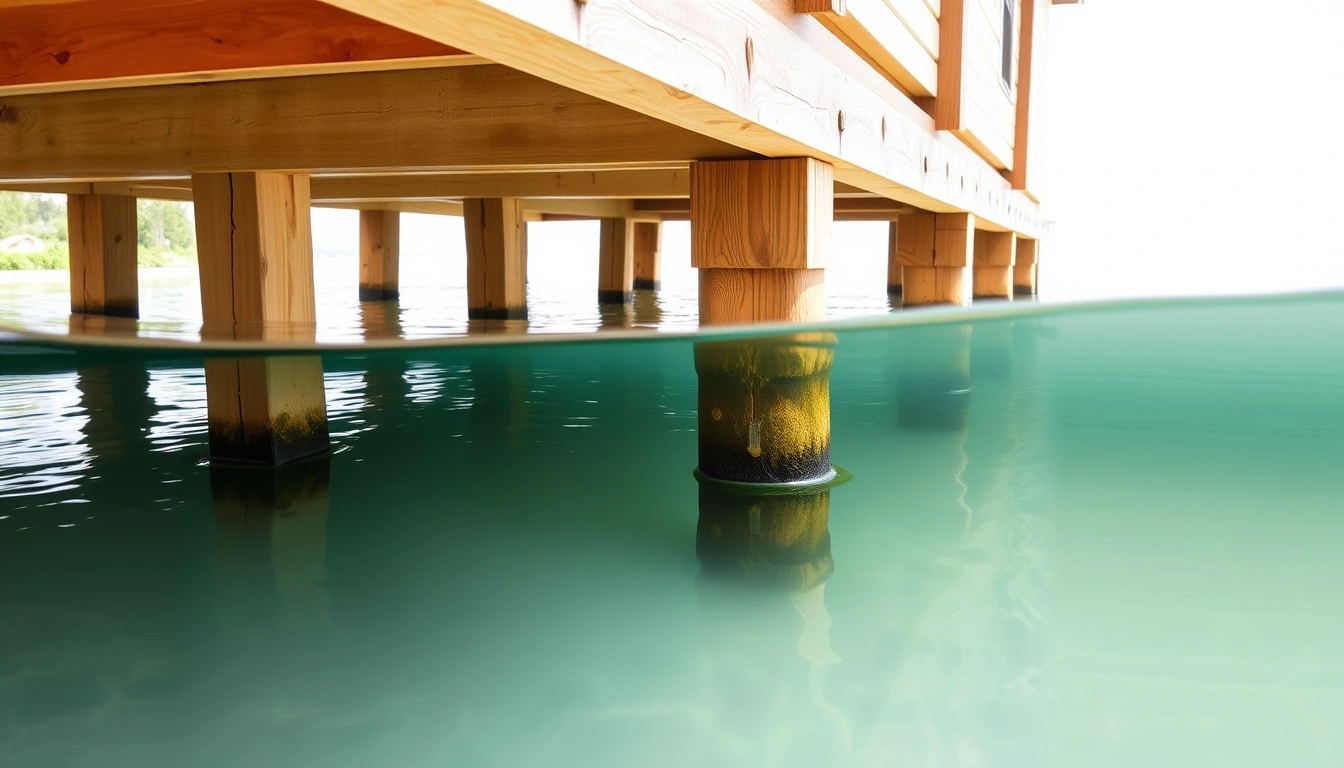
Stop adding water. Get the space safe. Then find the source before you pump anything out. If the water is more than a thin puddle, I would treat it as a crawl space drainage issue until a professional confirms otherwise.
Start with the quickest checks you can safely make:
- Turn off any failed sprinkler zones near the foundation, if the irrigation system is clearly contributing.
- Look at downspouts. A 2-inch downspout dumping beside the house can feed a crawl space all by itself.
- Check whether the yard slopes toward the house.
- Look for a ruptured supply line, HVAC condensate line, or water heater drain line.
- If the water is high enough to touch insulation, wiring, or floor framing, stop and call a licensed plumber, drainage contractor, or water damage pro right away.
For practical guidance on when water damage becomes a home-safety issue, see the EPA’s moisture-control resources and FEMA’s flood cleanup advice. In Dallas–Fort Worth, Houston, and similar Texas markets, summer storms can add inches of water in a short time, but slow seepage from clay soil is just as common. Clay swells when wet and can pin water against the pier and beam perimeter for days. So the fix often needs surface drainage and crawl space drainage, not just a fan.
Smell sewage? See gray water? Then do not crawl in it. Health and safety rules come first, and local plumbing code may require a licensed plumber for sewer-related work. If the source is unclear, a plumbing inspection is often the safest next step.
Why does standing water happen under pier and beam houses in Texas?
Water settles there when the crawl space becomes the low point on the property and nothing carries it off fast enough. In much of North Texas, blackland clay and heavy storm runoff make this worse; in Gulf Coast areas, a high water table and flat lots do the same.
The usual causes are:
- Poor grading — Soil should fall away from the house for at least several feet. If it slopes inward, rain runs toward the foundation.
- Short or disconnected downspouts — Water from a roof is a lot of water. One roof plane can dump hundreds of gallons in a storm.
- No perimeter drainage path — Some pier and beam houses have no French drain, swale, or sump system.
- Surface water entering vents or openings — Crawl space vents can let splash and runoff in during wind-driven rain.
- Plumbing leaks — A slow leak under a bathroom or kitchen can create a wet pocket that never dries.
- Condensation and poor ventilation — In humid months, a crawl space can stay damp even without a visible leak.
I would not blame the beams just because the floor feels soft. Usually, the framing is responding to moisture from outside the crawl space, not failing on its own. That distinction matters because replacing wood without fixing drainage is money down the drain.
For technical grounding, the EPA’s guidance on moisture control in crawl spaces is a good starting point, and local Texas jurisdictions often base requirements on International Residential Code concepts. Exact permit rules vary by city, but the core issue is the same: standing water is a building-envelope problem, not just a cleanup problem. For related background, see our page on crawl space ventilation and pier and beam foundation repair.
How much does it cost to fix standing water under a pier and beam house in Texas?
The cost depends on whether you need drainage, plumbing repair, drying, or structural repair. A small surface-water fix can stay in the low hundreds; a full crawl space drainage and remediation job can move into the several-thousand-dollar range.
Here is a practical Texas price range table:
| Service | Typical local range | What changes the price |
|---|---|---|
| Downspout extension or splash block install | $50–$250 per downspout | Length, burial, hard pipe vs. flexible pipe |
| Yard regrading near the house | $500–$3,000+ | Soil access, slope correction, haul-off |
| French drain or perimeter drain | $2,000–$8,000+ | Linear feet, depth, discharge point, rock, fabric |
| Crawl space sump pump system | $1,200–$4,500+ | Pump size, basin, battery backup, discharge run |
| Crawl space vapor barrier | $1,500–$6,000+ | Square footage, thickness, seam sealing, piers |
| Plumbing leak repair | $200–$2,000+ | Accessibility, pipe material, slab vs. crawl access |
| Water mitigation/drying | Often several hundred to several thousand dollars | Extent of standing water, dehumidifiers, monitoring |
| Wood repair or beam replacement | $1,000–$10,000+ | Damage extent, engineer input, framing access |
If you are in Austin, San Antonio, Fort Worth, or the outskirts of Waco or Bryan–College Station, I would expect price movement based on access. A crawl space with 18 inches of clearance is a different job from one with 30 to 36 inches of access and clear working room. Tight access makes everything slower. Messier, too.
The lowest quote is not always the best quote. If one company prices only a pump and another includes grading, discharge piping, and vapor barrier details, those are not the same solution. Ask what happens to the water after it leaves the crawl space. If the answer is vague, the problem will likely return. For more on comparing bids, see our foundation repair estimates guide.
What actually fixes standing water under a pier and beam house?
The real fix is usually a mix of drainage correction, water removal, and moisture control. If the house is in a Texas clay-soil area, I would almost never rely on a single measure.
The common repair stack looks like this:
1. Move roof water away from the foundation
Extend downspouts so they discharge well beyond the drip line, not right beside the pier line. In many cases, 4 to 10 feet of extension is enough to reduce splash and ponding. Buried solid pipe is better than a loose flexible hose when the yard layout allows it.
2. Regrade the soil
The ground should shed water away from the home. Even a small low spot can hold water after a 1-inch rain. On tight lots in older Dallas neighborhoods, grading can be limited by fences, sidewalks, and neighboring elevations, so a contractor may need to combine shallow swales with drain lines.
3. Add a French drain or interceptor drain
A French drain can intercept runoff before it reaches the crawl space. This is often the right answer when the house sits lower than the yard or when neighboring properties send water toward it. In clay soil, the drain design matters; a drain wrapped wrong or pitched badly can clog or pond.
4. Install a sump pump if water collects inside the crawl space
A sump pump is for collection, not prevention. It makes sense when water enters from below, when the lot cannot be regraded enough, or when the crawl space has a low point that keeps refilling. I would want a battery backup in areas that lose power during storms, which includes much of Texas during severe weather.
5. Put in a vapor barrier or encapsulation layer
A 6-mil liner is the bare minimum in many situations, but thicker material and sealed seams usually hold up better. Encapsulation is more expensive, but it can be the right call where humidity stays high for months, like Houston, Beaumont, or Corpus Christi.
6. Repair damaged wood and plumbing
Once the water source is controlled, inspect joists, sill plates, beams, and pier caps for rot or movement. If the plumbing leak caused the standing water, the pipe repair comes before any cosmetic work.
This is where a generic article often gets it wrong: it treats “drying” as the solution. Drying is only the middle step. If the water path stays open, the crawl space floods again. So, honestly, I’d talk to a qualified pro before signing off on a fix.
How long does the repair take, and when should I schedule it?
A simple drainage fix can take half a day, while a full crawl space system can take 2 to 5 days, depending on access and soil conditions. If structural repair is involved, the timeline can stretch longer, especially if an engineer needs to inspect the framing.
Typical timing looks like this:
- Downspout work: 1 to 4 hours
- Minor grading: 1 day
- French drain installation: 1 to 3 days
- Sump pump install: 4 to 8 hours
- Vapor barrier or encapsulation: 1 to 3 days
- Plumbing leak repair: same day to 2 days
- Beam or joist repair: 1 to 5+ days
Usually, the drier part of the year is best in Texas, often late fall through early spring, because crews can move soil more cleanly and standing water is less likely to return before the work is finished. In humid summer weather, crawl spaces take longer to dry, and rain delays are more common. Timing matters. A lot.
If you need emergency help after a storm, call quickly. A same-day visit can make sense when water is still rising, when the floor is sagging, or when electrical lines are threatened. If the water is static and the house is stable, a planned appointment may be enough, but I would not wait weeks. For storm-response basics, FEMA and the Red Cross both give useful cleanup guidance.
How do I know if I need a drainage contractor, plumber, or structural repair?
You need the right trade for the source of the water, and often you need two or three trades in sequence. A drainage contractor handles runoff and grading. A plumber handles supply or drain leaks. A structural repair contractor handles wood damage and movement.
Here is how I would sort it:
- Call a plumber first if the water is warm, smells like sewer, appears near a bathroom or kitchen, or shows up without rain.
- Call a drainage contractor first if the problem follows rainfall, downspouts, or yard runoff.
- Call a structural contractor or engineer first if floors are bouncing, sloping, or visibly out of level, or if beams and joists are soft, cracked, or moldy.
In Texas, licensing matters. Plumbing work that touches water, sewer, or gas lines should be handled by a licensed plumber under state rules. Drainage and foundation repair work may not fall under the same license category everywhere, so I would ask each contractor exactly what license, insurance, and permit responsibility they carry. For code and licensing basics, the Texas State Board of Plumbing Examiners and your city’s building department are the right places to verify requirements. If you are comparing bids, our contractor vetting checklist can help.
Permits can come into play if the work changes drainage discharge, involves structural repair, or ties into city stormwater systems. Dallas, Houston, Austin, and San Antonio all have their own review process. A contractor who ignores permits is not saving time; they are moving risk to the homeowner.
Red flags: quotes and quick fixes that should worry you
A quote should worry me if it promises to “fix” standing water without identifying the source. Water under a pier and beam house does not disappear because someone installs a fan, sprays foam, or tosses gravel under the house.
Watch for these red flags:
- No crawl space inspection before quoting
- Only one solution offered for a problem that clearly has multiple causes
- No plan for discharge on a drain or sump
- No mention of permits where structural or drainage changes are likely
- No discussion of humidity control after the water is removed
- Pressure to start immediately without showing where the water is coming from
I would be cautious about anyone who says encapsulation alone will solve every situation. Encapsulation is useful, but if a broken pipe is still leaking, or if the exterior grade sends water straight to the foundation, the liner becomes a bandaid over a leak. For crawl space best practices, the EPA and CDC both stress moisture control and cleanup, not shortcuts.
This is also the point where “cheap and fast” can be wrong for older pier and beam homes in places like East Dallas, San Antonio’s older neighborhoods, or historic homes in Fort Worth. Older framing often needs careful inspection, not just surface drying.
Who this fix is not for
This approach is not for a house with an active sewage backup, a collapsed floor, or standing water high enough to submerge electrical hazards. It is also not the right first step if you already know the water is coming from a major plumbing failure or a broken sewer line.
If the framing is visibly failing, the crawl space is inaccessible, or the property sits in a recurring flood path, I would skip the cosmetic fix and go straight to a licensed inspection. That may mean a drainage specialist, plumber, structural contractor, or engineer before any repair quote is accepted. For flood-prone properties, FEMA flood guidance is a useful starting point.
FAQ: standing water under a pier and beam house
Can I just pump the water out and be done?
No. Pumping removes the symptom, not the cause. If downspouts, grading, or a plumbing leak stay unfixed, the water will come back after the next 1-inch rain or even a heavy sprinkler cycle.
How fast should standing water be removed?
As soon as possible, ideally the same day, because prolonged moisture raises the risk of rot, mold, and insect activity. If insulation or wiring is wet, I would treat it as urgent. The EPA’s mold and moisture guidance supports quick drying and source control.
Is a French drain enough under a pier and beam house?
Sometimes, but not always. A French drain helps with runoff and perimeter water, but it will not fix a hidden pipe leak or a severely low crawl space without a pump.
Do I need a free estimate first?
A free estimate is useful if it includes a crawl space inspection and a clear explanation of the water source. A no-look quote is not useful at all.
Can you provide same-day emergency help?
Same-day service is worth asking for when water is still entering the crawl space, a pump has failed, or floors are starting to sag. For non-emergencies, an inspection booked within a few days is often enough.
What I would do next
I would start with source control, then choose the smallest repair that actually stops the water path, and only then decide whether the crawl space needs a pump, drain, vapor barrier, or structural repair. For most Texas pier and beam homes, the right fix is a combination of exterior drainage work and crawl space moisture control, not a single answer.