
Pier and Beam Leveling vs Foundation Piers: Which Repair Fits the Problem?
Last updated: September 10, 2026
Key Takeaways
- Those are not the same repair, and choosing the wrong one can burn a $1,000-plus service call while leaving the real issue untouched.
- For 2026 pricing, I’d think in terms of scope, not a single flat number. That’s the cleaner way to read local quotes.
- Pier and beam leveling corrects a floor system that has sagged, rotted, or slipped out of plane.
- Foundation piers fix a house that is sinking, tilting, or splitting because the support below it has failed.
Table of Contents

- Pier and Beam Leveling vs Foundation Piers: which repair fits the problem?
- What each repair actually changes under the house
- What does foundation repair cost in Houston, and how do the prices compare?
- How does Houston soil and weather change the repair choice?
- How long does each repair take, and when should you schedule it?
- How do I vet a contractor for this kind of work in Houston?
- Red flags: quotes that should worry you
- FAQ: urgent questions Houston homeowners ask
- Bottom line: which one should you choose?
Pier and beam leveling corrects a floor system that has sagged, rotted, or slipped out of plane. Foundation piers fix a house that is sinking, tilting, or splitting because the support below it has failed. Those are not the same repair, and choosing the wrong one can burn a $1,000-plus service call while leaving the real issue untouched.
Pier and Beam Leveling vs Foundation Piers: which repair fits the problem?
Start with where the movement began. That’s the real question. Pier and beam leveling fits when the crawlspace framing is the problem; foundation piers fit when the ground support has gone sideways. If you notice a soft spot in one room, a dip along a joist line, or doors that suddenly rub after humid seasons in places like Houston, Katy, Cypress, The Woodlands, or Spring, I’d look first at the beam-and-joist structure. But if a whole corner is settling, brick shows stair-step cracks, or the exterior grade has fallen away from one side, piers are usually the heavier fix.
The distinction matters because leveling is about getting the framing back onto a workable plane. That might mean shims, sistering damaged members, or resetting supports in the crawlspace. Piers are different beasts altogether: they’re structural supports driven, drilled, or helical-screwed into load-bearing strata, often to Texas Engineering Practice Act standards and local permit rules. Leveling by itself does not stop settlement. And piers alone do not cure rotted sills, termite damage, or undersized beams; for that, see foundation repair services and crawl space repair.
If you live in the greater Houston area — Pasadena, Pearland, Sugar Land, Bellaire, Missouri City — the clay underfoot can swell and shrink with moisture swings. So a repair quote ought to say whether the failure is inside the crawlspace, below the footing, or both. I would not trust any proposal that tosses around “leveling” and “piers” as if they were the same thing without a measured floor elevation map and a written explanation of what moved, and why. Smoke and mirrors. No thanks.
What each repair actually changes under the house
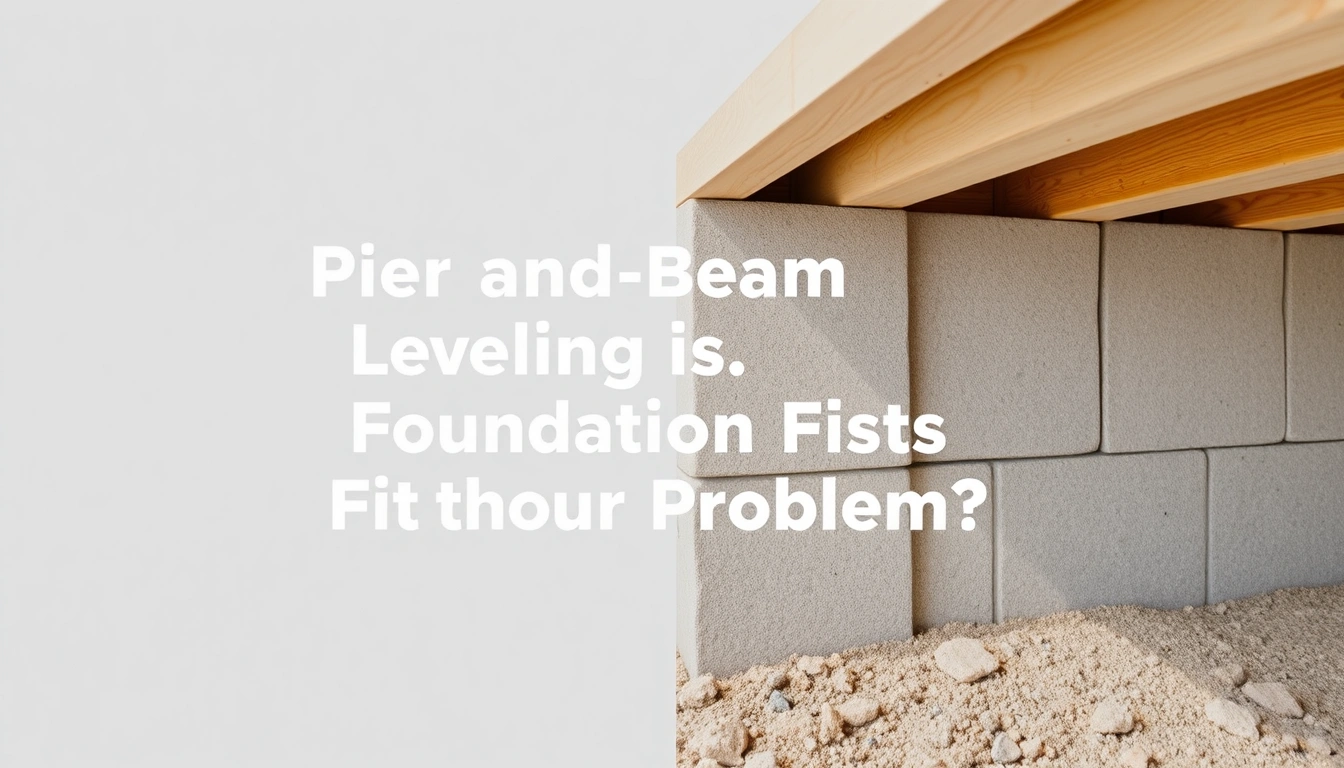
Pier and beam leveling changes the wood structure; foundation piers change the load path into the ground. That split is simple, but it’s easy to blur on a rushed estimate. A leveling job may include adjusting existing shims, replacing crushed blocks, jacking beams back toward level, or adding new support posts in crawlspaces that usually have 18 to 30 inches of clearance. That work is common when the floor slopes but the perimeter foundation is still intact.
Foundation pier work goes another direction. Concrete pressed piles, drilled concrete piers, steel push piers, and helical piers all transfer load past unstable clay or fill soil and into deeper, steadier material. In Harris County and nearby counties with expansive Gulf Coast soils, that’s often the right answer when settlement is progressive rather than cosmetic; the National Institute of Standards and Technology notes how expansive soils can create significant structural problems, and FEMA’s repair guidance also stresses checking the cause before picking a fix.
A simple rule works pretty well: if the house moved because the ground moved, piers address the cause. If the house moved because the framing failed on top of a still-serviceable support system, leveling addresses the structure. Many homes in older neighborhoods such as Oak Forest, Meyerland, Heights-adjacent blocks, and older subdivisions near the Beltway need both. That combination is pricey, but pretending otherwise is how bad decisions get made.
For a reader deciding what to book, this is the simple split:
– If floor slope is isolated and the subfloor feels springy, start with a crawlspace evaluation.
– If you have exterior cracking, repeated settlement on the same corner, or a measured differential settlement problem, start with a foundation pier estimate.
– If there is visible wood rot, insect damage, or past plumbing leaks under the house, do not assume piers alone will fix it.
What does foundation repair cost in Houston, and how do the prices compare?
Foundation piers usually cost more than pier and beam leveling because they solve a deeper structural problem. In Houston, a plain-language estimate for light leveling might be a few hundred dollars for minor adjustments, while major crawlspace restoration or structural remediation can run into the low thousands. Foundation pier projects often start in the low thousands and climb fast with the number of piers, access difficulty, and engineering needs.
Here is the practical way I would frame local pricing in 2026: think in repair scope, not one flat price. A small, accessible leveling job on a pier-and-beam home in neighborhoods like Sharpstown or Spring Branch may stay much lower than a pier installation that needs permits, engineered drawings, and multiple points of support. The more the work requires excavation, concrete, steel, or re-leveling after lift, the higher the bill. That math stops working fast once the scope grows.
| Service in the Houston area | Typical scope | Local price range |
|---|---|---|
| Minor pier and beam leveling | Adjusting supports, shims, small beam corrections | Low hundreds to low thousands |
| Crawlspace structural repair | Beam repair, jack posts, subfloor patches, re-leveling | Mid-thousands, depending on damage |
| Concrete pressed piles or drilled piers | Settlement correction with multiple support points | Often several thousand and up |
| Steel push piers / helical piers | Deeper stabilization on unstable or expansive soils | Often several thousand and up |
| Combined leveling + pier project | Settlement plus damaged framing | Highest-cost option, especially with engineering |
Local conditions push the price around. In Houston, drainage problems, tree roots, broken plumbing, high humidity, and saturated clay can all make the repair larger. Access matters too. A tight crawlspace in older homes near Alief or East End can take longer than a wide-open one in newer construction. If a contractor quotes one price before checking floor elevations, soil movement, and crawlspace access, I’d treat that as a warning and consult a professional before agreeing to the work; the EPA’s homeowner guidance on moisture and drainage is a useful place to start, and a local structural engineer can confirm what moved.
How does Houston soil and weather change the repair choice?
Houston’s expansive clay makes the repair choice less forgiving because the ground can move with moisture changes of just a few inches of rain over a season. After long dry spells, clay shrinks. After heavy rain, it swells. That push-pull can leave a house settled at one corner, then rebounding unevenly. In plain terms, a floor that looks fine today may not stay that way if the drainage problem remains.
Local geography changes the picture. Homes in low-lying parts of Meyerland, the Gulfton area, or near bayou corridors can see more moisture variation than homes on better-drained ground. Add hurricane-season rain, poor lot grading, and shaded yards that dry slowly, and the repair decision gets easier to misread. A floor that seems “off” may be reacting to seasonal humidity, but a foundation that keeps worsening across 6 to 12 months usually points to settlement, not just seasonal movement; for drainage basics, see Houston drainage services.
I’d be careful about two mistakes. First, don’t call every slope a foundation failure. Some pier-and-beam homes need beam correction, subfloor replacement, or new support posts, not a full pier job. Second, don’t dismiss every crack as “just cosmetic.” If a brick veneer crack widens, a door binds, and the same corner keeps dropping, that is not decorative damage. The USGS has long documented how soil moisture and shrink-swell behavior can affect structures, so a professional diagnosis matters. What looks minor can turn into a money pit.
For Houston homeowners, timing matters too. Spring and early fall usually give better crawlspace conditions than the wettest part of hurricane season. If a contractor says the job must happen immediately, ask whether the issue is active settlement, water intrusion, or a safety concern. Those are different problems, and they do not all need the same speed.
How long does each repair take, and when should you schedule it?
Once you know whether the problem is pier and beam leveling or foundation piers, the timeline gets easier to read. Pier and beam leveling is usually faster than pier installation, but the real schedule depends on what is hiding under the house. A simple adjustment can take a day. Beam replacement, subfloor repair, and re-leveling can stretch to several days. Foundation piers often take longer because they may require excavation, drilling, staged lifting, post-lift inspection, and sometimes an engineer’s sign-off.
In Houston, I’d schedule crawlspace work outside heavy-rain weeks if possible. Wet soil can limit access and change how a house responds to lifting. If a home sits in Katy, Pearland, or Friendswood on clay-heavy ground, the contractor may need to wait for a safer moisture window. That is not stalling; it is how you avoid over-lifting a wall or cracking finishes.
A useful way to think about duration:
– Minor leveling: about 1 day
– More involved crawlspace structural work: 2 to 4 days
– Foundation pier installations: often several days, especially with engineering or permit steps
– Combined repair: longest timeline, because one fix exposes the need for the other
Need same-day service because a door will not close or a floor feels unsafe? Say that at booking. Emergency help is usually for active structural movement, a broken support, or a plumbing leak that has undermined a support point. Same-day “free estimate” calls are common, but I would not let the promise of a free inspection replace a written explanation of the repair path; for comparisons, see our foundation inspection guide and our crawlspace repair checklist.
How do I vet a contractor for this kind of work in Houston?
I’d vet a contractor by asking whether they separate diagnosis from repair and whether they can explain the difference between settlement, framing failure, and moisture damage. In Texas, structural work can touch local permit rules, engineered plans, and licensing issues through the Texas Department of Licensing and Regulation for certain trades, plus city permit requirements where applicable. A contractor who cannot tell you when engineering is needed is not the one I would hire.
Look for these specifics in the proposal:
– Floor elevation readings, not just a verbal “it’s out of level”
– A clear statement of whether the job is crawlspace leveling, foundation piers, or both
– Repair details for wood damage, not only support adjustments
– Any permit or engineering steps required in Houston or your suburb
– A written scope for drainage, vapor barrier, or plumbing issues if they affect the work
Be wary of anyone who says one pier system fixes every settlement issue, or that a quick jack-up will erase old moisture damage. In neighborhoods with older pier-and-beam homes, such as parts of Oak Forest, Acres Homes, and Third Ward, the structure often needs both carpentry and support work. If the quote ignores rotten sill plates, cracked joists, or previous patchwork, the repair is incomplete. A licensed structural engineer or experienced home foundation repair team should be able to explain why. Plain and simple.
Nearby towns and suburbs often served by Houston-area structural repair crews include Bellaire, West University Place, Jersey Village, Tomball, Humble, League City, and Missouri City. Service area alone does not tell you skill, though. Ask about local permit familiarity, not just a wide map.
Red flags: quotes that should worry you
A quote that skips the diagnosis should worry me immediately. If a contractor gives a price without crawlspace access, elevation data, or a moisture review, that is not a repair plan. It is just a number. Foundation work in the Houston area deserves more than that because soil, drainage, and framing conditions vary block by block.
Other red flags are easy to spot:
– “Leveling” used as a blanket term for everything
– No mention of drainage, plumbing leaks, or soil moisture
– No distinction between cosmetic cracks and structural movement
– A promise that the house will stay perfectly level forever
– A recommendation for piers when the problem is clearly rotten framing, or vice versa
I’d also walk away from any proposal that treats old pier-and-beam homes like slab foundations. A 1940s or 1950s home in central Houston may need shoring, beam replacement, and selective leveling, while a newer home on expanding clay may need piers plus drainage correction. One-size-fits-all advice is expensive here. The Federal Trade Commission’s consumer guidance on home improvement contracts is a good reminder to get the scope in writing before work starts.
FAQ: urgent questions Houston homeowners ask
Can I get same-day help for a sagging floor?
Yes, many contractors offer same-day inspections in Houston, but same-day repair depends on safety, access, and whether the issue is leveling or structural settlement.
Is a free estimate enough to choose between leveling and piers?
No, a free estimate is only useful if it includes floor elevation readings, crawlspace inspection, and a written explanation of the cause of movement.
Do I need a permit for foundation piers in Houston?
Often, yes, depending on the scope and municipality. Permit and engineering requirements can vary by city, so I would confirm before work starts.
Which repair is more urgent?
Foundation piers are more urgent when the house is actively settling or tilting; pier and beam leveling is more urgent when the floor is unsafe, bouncy, or causing doors, cabinets, and subflooring to fail.
Can you repair homes in Pasadena, Pearland, and Spring from the same service area?
Yes, Houston-area foundation and crawlspace crews commonly serve those suburbs, but soil conditions and permit rules still need to be checked for each property.
Bottom line: which one should you choose?
Choose pier and beam leveling when the structure above the supports is the problem. Choose foundation piers when the supports below the house have failed because of settlement or unstable soil. If you live in Houston or nearby suburbs and the proposal cannot clearly explain which side of that line your house is on, I would not sign it yet.
The best repair is the one that matches the failure, but that needs a qualified professional to confirm it — not a guess from the phone. Around here, that usually means respecting the clay, the drainage, the age of the house, and the condition of the crawlspace before anyone lifts a beam or drives a pier.