
Should You Repair or Replace a Pier and Beam Foundation?
Last updated: September 10, 2026
Key Takeaways
- But if you have active floor movement, a soft spot, or a leak under the house, waiting 3 or 4 months can make the damage worse.
- They should worry you a lot if the quote promises a cheap fix for a structural problem.
- Usually for structural work, yes or at least it should be checked with the local building department.
- If the damage is localized, I would repair a pier and beam foundation.
Table of Contents

- Repair or replace? The short answer for homes on piers and beams
- What does a pier and beam foundation repair usually involve in Dallas–Fort Worth?
- What does replacement mean for a pier and beam foundation?
- How much does pier and beam foundation work cost in the Dallas area?
- How do Dallas soil, weather, and crawl-space conditions change the decision?
- How to tell if repair is enough or if you should replace
- How to vet a pier and beam contractor in Dallas–Fort Worth
- Red flags that should worry you
- When is the best time of year to do this work in North Texas?
- FAQ: pier and beam foundation repair vs. replacement
- Bottom line
One side of the choice is pretty clear: if the damage is localized, I would repair a pier and beam foundation. But when framing has dropped in several spots, the posts are rotted, or the crawl space stays damp, replacement—or a major rebuild—starts to look justified. That is the real fork in the road. Not theory. Can it be made level, dry, and stable without throwing good money after bad?
Repair or replace? The short answer for homes on piers and beams
Repair is the right move when the problem is limited to a few piers, a weak beam section, a bad shim pack, or one area of soft soil. Replacement makes more sense when the foundation has widespread settlement, failing wood members, or a crawl space that keeps inviting the same damage back.
Around Dallas, Fort Worth, Arlington, Plano, Garland, and nearby suburbs, I’d be extra cautious with any pier and beam foundation that has shifted more than once. North Texas clay swells and shrinks with moisture swings, so a “simple fix” can turn into the first step in a longer chain. If the structure is still serviceable, repair can buy many years. If the crawl space is wet, low, and hard to reach, a full replacement or major reconstruction may be worth discussing with a structural professional.
A simple test helps. If you can point to one or two bad spots, repair is usually on the table. If you can point to the whole house and say “this has been going on for years,” replacement deserves a hard look. Plain as that.
What does a pier and beam foundation repair usually involve in Dallas–Fort Worth?
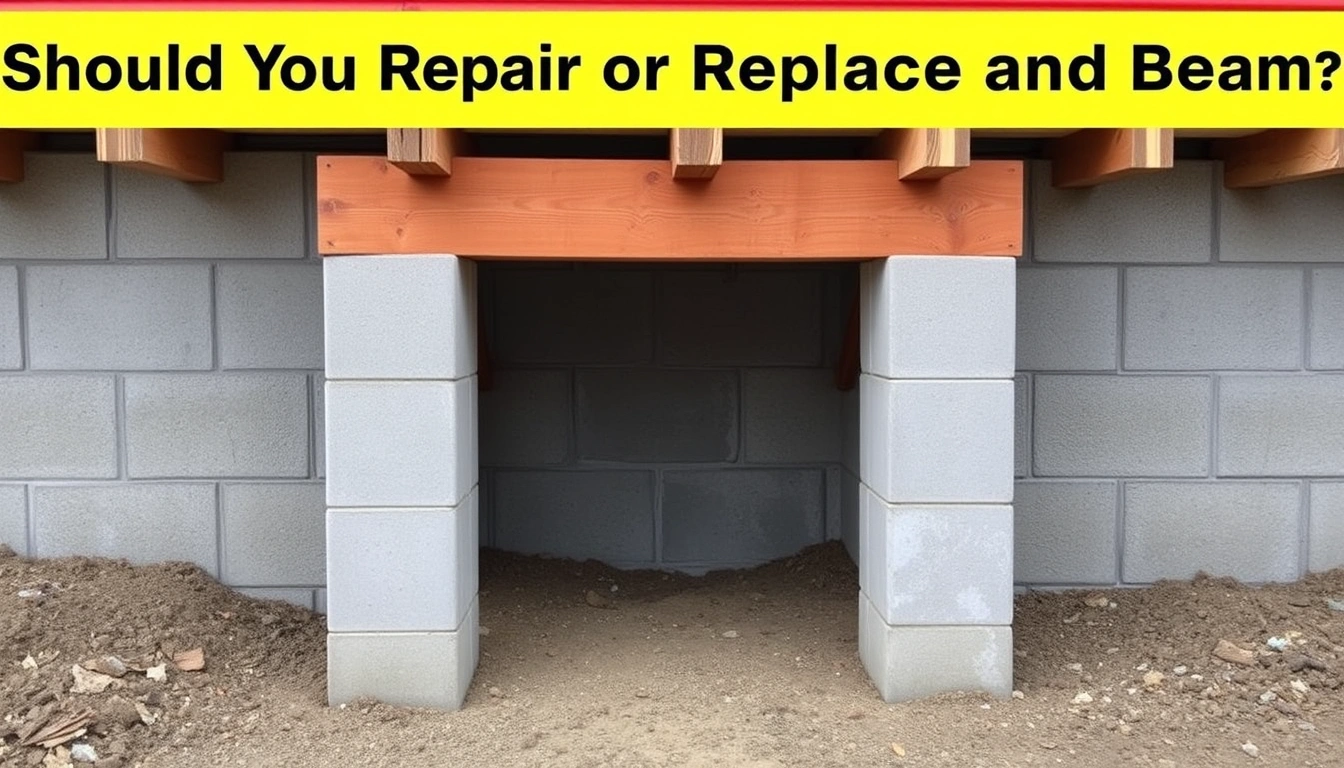
A repair often means stabilizing the house, correcting the worst settlement, and fixing the cause, not just the symptom. On a pier and beam system, that often includes replacing damaged piers, sistering or replacing beams and joists, resetting shims, and improving drainage or crawl-space moisture control.
Here is what the work commonly looks like in the Dallas–Fort Worth area:
- Single-pier or small-area repair: one to several piers reset or rebuilt, with local leveling.
- Beam repair: a damaged wood beam section is replaced or reinforced, often where a leak has soaked the framing.
- Joist repair: floor joists under a sagging room are repaired if they are split, rotted, or heavily notched.
- Crawl-space corrections: vapor barrier, drainage correction, venting strategy, and sometimes plumbing repairs.
The local soil matters. Much of North Texas sits on expansive clay, and that clay can move with wet and dry cycles. When a pier settles because the soil underneath shrank, the repair has to address support and moisture, or the problem tends to come back. A repair quote that ignores gutter runoff, grading, or plumbing leaks is missing part of the job.
Because the crawl space and framing are connected, repair also makes more sense when the home is older and the floor structure is still mostly sound. Many pier and beam homes in older Dallas neighborhoods can be stabilized without touching the entire system. Nice when it works. Messy when it doesn’t.
For a broader overview of how structural movement relates to drainage and soil, see the foundation repair services page and the crawl space repair page.
What does replacement mean for a pier and beam foundation?
Replacement means rebuilding the support system because the existing one is no longer dependable. That can range from a partial rebuild of several bays to a much larger structural reset under the house.
Replacement usually involves:
- Temporary support of the home
- Removal of failed piers, deteriorated beams, or rotten framing
- New piers set to proper depth and bearing
- New beams and joists where needed
- Re-leveling the structure
- Final inspection and cleanup
Practically speaking, replacement is more invasive, more expensive, and more disruptive than repair. And it tends to make sense mainly when the foundation is not the only problem. In Plano or Richardson, for example, if plumbing leaks have been feeding crawl-space moisture for years and several wood members are compromised, I would not expect a patch job to hold up well.
Replacement is also the better call when the house has repeated settlement after earlier repairs. One repair is normal. Two or three repairs to the same areas usually means the support system or drainage is still failing. The math stops working fast.
If you are comparing support systems, the pier and beam foundation guide explains how these homes are built and why repair decisions differ from slab work.
How much does pier and beam foundation work cost in the Dallas area?
It costs less to repair a localized problem than to replace an aging support system, and the gap can be wide in North Texas. Small repairs can stay in the low thousands, while a major rebuild can climb much higher depending on access, square footage, and the amount of wood replacement.
| Work type in Dallas–Fort Worth | Typical price range |
|---|---|
| Minor leveling and a few piers | $1,500–$4,000 |
| Moderate repair with beam or joist work | $4,000–$12,000 |
| Crawl-space moisture correction tied to foundation work | $1,000–$6,000 |
| Major structural repair or partial rebuild | $10,000–$25,000+ |
| Full replacement-style reconstruction under a larger home | $25,000–$50,000+ |
Those ranges are broad on purpose. A tight crawl space in East Dallas, an older home in Oak Cliff, or a pier and beam house in Arlington with poor access can cost more than a similar-sized house in a newer part of Frisco with easier access and better drainage. Plumbing damage, termite damage, and asbestos-containing materials can push the price higher too.
If a quote sounds unusually low, I would ask what is excluded. Many low bids leave out leveling to tolerance, beam replacement, moisture correction, permits, or post-repair warranty language. Before you sign, compare the scope with the home inspection checklist and ask for a second opinion if it feels thin.
How do Dallas soil, weather, and crawl-space conditions change the decision?
They make moisture control part of the decision, not an afterthought. In Dallas–Fort Worth, the combination of expansive clay, long dry spells, sudden rain, and summer heat can punish a pier and beam foundation that is already vulnerable.
Three local factors matter most:
- Expansive clay soils. These soils swell when wet and shrink when dry, which can lift or drop piers unevenly.
- Drainage patterns. Poor grading, short downspouts, and ponding near the home can undermine piers fast.
- Crawl-space humidity. A damp crawl space can rot beams, attract pests, and soften subfloor material.
This is why I’d be wary of a repair that does not include a moisture plan. In a dry month, a foundation may look fine. After a few heavy storms, the same house can move again if the crawl space and drainage were never corrected.
The Texas Department of Licensing and Regulation is the agency to check for contractor oversight and licensing-related questions, and local building departments handle permit rules for structural work. For code and safety context, the International Residential Code is also a useful reference point for structural framing standards. For homeowners comparing repair options and permits, the structural engineering page is a useful starting point. If your project touches plumbing or gas lines in the crawl space, the permit picture gets more serious. For soil and moisture context, see the drainage solutions page.
When the crawl space stays damp, I lean toward a larger repair scope or replacement. Dry support lasts longer than pretty leveling.
How to tell if repair is enough or if you should replace
Repair is enough when the structure still has a clear path back to stable support. Replacement is the better choice when the house has lost that path.
I would repair if most of these are true:
- The damage is limited to one side, one room, or a small span
- The beams and joists are mostly sound
- The crawl space is accessible
- The home has not had repeated settlement in the same spots
- Drainage problems can be corrected without major demolition
I would seriously consider replacement or a major rebuild if most of these are true:
- Multiple rooms are out of level
- Several beams or joists are rotted
- Piers are crumbling or sinking in several areas
- The crawl space stays wet after rain
- The home has already had foundation work that did not hold
Across older homes in Oak Cliff, Richardson, Mesquite, and Grand Prairie, I often see a mix of age-related wear and moisture damage. That does not automatically mean replacement. It does mean you should not approve a repair that only lifts the floor and ignores the source of the movement. A foundation repair contractor should be able to explain that difference clearly.
One honest limitation: not every house is worth restoring to perfection. If the home is due for major plumbing, floor framing, and foundation work at the same time, the combined cost may justify a larger rebuild or, in some cases, a different plan entirely. Fair trade-off, really.
How to vet a pier and beam contractor in Dallas–Fort Worth
Hire the contractor who can explain the structure, the soil, and the moisture path in plain language. A good estimate should show how the house will be supported, what will be repaired, and what will be left alone.
When I review quotes for this kind of work, I look for these details:
- The number and type of piers to be repaired or replaced
- Whether beams and joists are included
- The leveling method and target
- Moisture-control recommendations
- Permit responsibility
- Warranty terms in writing
Ask whether the contractor works in your city and nearby areas such as Arlington, Irving, Carrollton, Plano, Garland, Mesquite, or Lewisville. A contractor who regularly handles pier and beam homes in North Texas should understand crawl-space access, utility coordination, and the way local clay behaves after a wet spring or a dry August. If you want to compare service areas or scope, the foundation repair Dallas page and the pier and beam repair page can help.
Also ask who handles post-work adjustments if the floor settles slightly after the first rain cycle. In this region, that question matters.
If a bid is vague, pushes you to sign the same day, or avoids discussing drainage, I would pass.
Red flags that should worry you
They should worry you a lot if the quote promises a cheap fix for a structural problem. Pier and beam work done badly can hide damage instead of solving it.
Watch for these warning signs:
- No crawl-space inspection
- No mention of rot, moisture, or drainage
- A price that covers “leveling” but not support repair
- Pressure to decide before a second opinion
- No written scope with counts, locations, and materials
- No permit discussion when structural work is involved
A repair can fail quickly if the contractor only shims the floor and leaves bad piers in place. Replacement can fail too if the new work sits in the same wet soil without drainage correction. In North Texas, the house and the ground under it should be evaluated together, and a qualified professional should be consulted before major structural work begins. The waterproofing page and the crawl space encapsulation page cover the moisture side of that equation.
When is the best time of year to do this work in North Texas?
For non-emergency projects, late winter through spring is often a practical window, but urgent repairs should not wait for a perfect season. In Dallas–Fort Worth, very hot summer weather, sudden fall rain, and winter cold all create scheduling and soil-moisture challenges.
If I had a non-emergency repair, I’d aim for a period when the soil moisture is relatively stable and the crawl space is accessible without extreme heat. That often means February through May, or parts of fall after the worst summer shrinkage has settled. But if you have active floor movement, a soft spot, or a leak under the house, waiting 3 or 4 months can make the damage worse.
Permits and inspection timing can add a few days to a couple of weeks depending on the city. In Dallas, Fort Worth, and surrounding municipalities, structural work may need a permit, and inspection availability can affect the schedule. If timing matters because of a leak or sagging floor, the emergency foundation repair page explains when to act fast.
FAQ: pier and beam foundation repair vs. replacement
Can I get a same-day estimate for pier and beam foundation work?
Often, yes, but a same-day estimate is usually preliminary. A real proposal usually needs crawl-space access, a level survey, and enough time to inspect beams, joists, and moisture conditions.
Is emergency repair possible if a floor suddenly sags?
Yes, emergency stabilization is possible in some cases. If a floor drops suddenly or you hear cracking, stop using the area and call for immediate structural assessment; do not wait for a routine appointment.
Do I need a permit for this in Dallas or Fort Worth?
Usually for structural work, yes or at least it should be checked with the local building department. Rules vary by city and by the scope of the repair, so permit responsibility should be confirmed before work starts.
How long does repair or replacement take?
Small repairs can take 1 to 3 days, while larger structural work can take a week or more depending on access, inspection timing, and how much wood must be replaced.
Should I replace if the quote is only a few thousand dollars higher than repair?
Not automatically. If the higher quote includes proper support, moisture correction, and longer-lasting structural work, it may be the better value. If it only adds extra labor without fixing the cause, I would question it.
Bottom line
You should repair a pier and beam foundation when the damage is limited, the framing is still sound, and the crawl space can be dried and stabilized. You should replace or rebuild when the settlement is widespread, the wood is failing, or the same problem has already come back after earlier work.
In Dallas–Fort Worth, the deciding factors are usually the same: expansive clay, drainage, crawl-space moisture, and the amount of rot in the framing. If you are in Dallas, Fort Worth, Arlington, Plano, Irving, Garland, Mesquite, or nearby towns, I would get a detailed inspection, a written scope, and a second opinion if the quote is vague or unusually cheap.
The right answer is the one that fixes the structure for the long run, not the one that only makes the floor look level for a month.