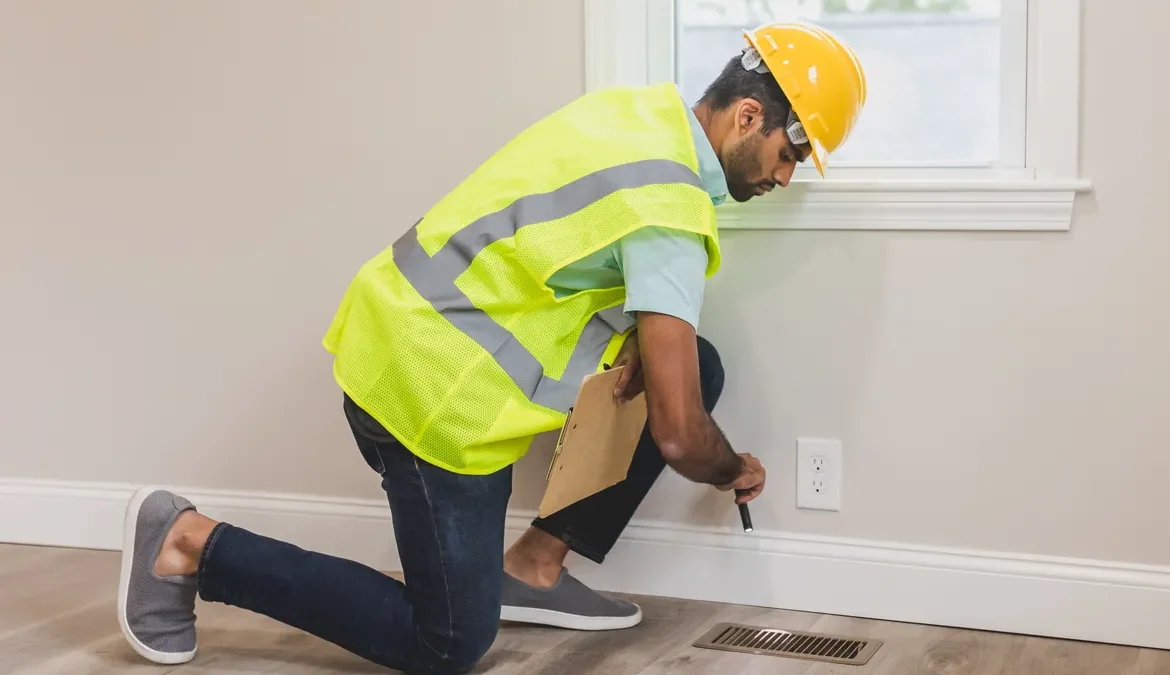
How to Tell If a Pier and Beam House Is Tilting
Last updated: October 24, 2026
How to Tell If a Pier and Beam House Is Tilting starts with one question: is the whole structure leaning as a unit, or is one room just uneven? Quick answer: if the same directional lean shows up in 3 or more places, the house may be tilting and should be checked by a qualified professional. The quickest way to spot it is to look for a pattern across floors, doors, windows, and exterior gaps, then check whether that pattern points in one direction.
Start with the house-wide pattern, not one bad floorboard
Tilt shows up as a repeated directional change, while normal unevenness usually stays local to one room or one span. That difference matters because a single soft spot in a floor can come from a joist issue, but a tilted house often leaves clues on several sides of the building at once.
Begin outside if you can see all four walls. Look for a side that appears lower than the opposite side, a roofline that no longer looks level, or a porch and main structure that seem to meet at a slight angle. Then go inside and compare what you see from one end of the house to the other. A real tilt often produces the same general lean in multiple places.
Key takeaways
- Tilt is a house-wide pattern, not one isolated dip.
- Look for the same direction of lean in floors, doors, windows, and exterior gaps.
- A single bad room is weaker evidence than several clues lining up.
- The most useful first check is visual, because it shows whether the problem is localized or structural.
If the house is visibly leaning and the pattern is clear, that is already useful information. If the clues are scattered and do not point the same way, the issue may be unevenness rather than tilt. This page is part of the larger topic of foundation movement and structural behavior, but here the focus stays on recognizing tilt itself.
How do I check for house tilt in a pier and beam house?

You check for house tilt by comparing one side of the house to the other, then matching what you see on the inside to what you see outside. That is the most reliable way to tell whether the structure is leaning instead of simply having a rough floor.
-
Stand back and view the full house from at least 2 directions.
Use the street, driveway, or backyard so you can see long lines like the roof edge, porch top, siding, and trim. If the house is tilting, one side usually looks lower or the whole body of the house looks out of square. -
Pick one fixed reference line and compare it to the house.
A fence line, a level sidewalk, or the edge of a slab nearby can help your eye. When the house is tilted, the difference between that fixed line and the roofline or trim tends to stay consistent across a long span, not just in one corner. -
Walk the interior and note where objects feel out of plumb.
Watch door casings, cabinet faces, and tall wall edges. If several vertical lines seem to lean the same way, the house may be shifting as a whole. One crooked picture frame does not count. -
Open and close 3 or 4 doors and windows in different parts of the house.
A tilt often affects multiple openings, not just one. Doors may latch differently on the same side of the house, and windows may feel misaligned in a matching direction. -
Check the floor slope in more than one room.
A marble, a ball, or a smartphone level can show whether the floor drops in the same direction from room to room. If the floor falls toward one side of the house in several areas, that is stronger evidence than a single low spot. -
Look at exterior joints and separation.
Gaps around trim, siding seams, chimney interfaces, or porch connections can appear where the structure has shifted. The important sign is repetition: several openings on the same side or corner tell more than one crack does. -
Decide whether the clues point the same way.
When the floors, doors, windows, and exterior gaps all lean or shift in the same direction, the house may be tilting. When they do not, you are probably looking at unevenness in one area instead.
The main mistake here is chasing the most dramatic symptom. A sticking door can be real, but it is not enough by itself to call the whole house tilted.
What visual clues point to a real tilt?
A real tilt usually shows up as a slanted relationship between the house and objects that should stay straight. That includes wall edges, trim, the roofline, and the meeting points between the house and attached structures.
The easiest visual clue is a line that should look level or plumb but does not. Look at the top edge of the roof, the horizontal trim line under the eaves, the bottoms of windows, and the edges of long interior walls. If those lines all appear to sag or rise in one direction, the eye is often seeing the house’s overall lean.
Pay attention to asymmetry. One corner may look compressed while the opposite corner looks open. On the outside, siding boards or brick joints may not seem to meet cleanly at the same angle from one end of the wall to the other. On the inside, baseboards may appear to climb or drop along a room length of 10 feet or more.
A true tilt can also make straight objects look wrong in relation to the house. A door that used to look square may now seem slightly diamond-shaped in its opening. A long hallway may appear to “run downhill” even before you put a level on it. That visual cue matters because it tells you the issue is not just one loose cabinet or warped board.
Do not overread small visual differences. Old houses are rarely perfect, and a 60-year-old door casing can fool the eye. What matters is a repeated directional pattern across several parts of the structure. If the same lean shows up on multiple walls and openings, the clue becomes much stronger.
What door and window problems mean tilt?

Doors and windows that change behavior in more than one room can be a sign of tilt, especially when the changes line up on the same side of the house. A single sticky door can have a local cause, but a cluster of misbehaving openings points to a broader shift.
Start with doors. If a door rubs at the top on one side of the house and another door on the same side rubs in a similar way, that is more meaningful than one difficult latch. A door that swings open by itself or will not stay shut can also reflect a floor or frame that is no longer square. The key is whether the problem repeats in a pattern.
Then look at windows. Windows that were smooth can become hard to raise, hard to lock, or visibly out of line in their frames. If the sash jams in several rooms, or if the gap at the top or bottom is uneven across multiple windows, the house may be leaning enough to distort the openings. A window that binds only once is less useful evidence than one that binds in different rooms.
There is a simple way to sort tilt from routine wear: compare the same type of opening in different parts of the house. A front door and a back door, or two windows on opposite ends of the building, should not both develop the same kind of misalignment by chance unless the structure has moved. If the pattern follows the same slope, it becomes harder to dismiss.
According to the U.S. Department of Energy, air leaks around doors and windows can waste 10% to 20% of a home’s heating and cooling energy, so not every opening problem is structural. A caution here: old hardware can mimic structural movement. Hinges loosen, weatherstripping swells, and seasonal moisture can make wood swell or shrink. That is why doors and windows should be treated as part of a pattern, not as proof on their own; if the pattern is unclear, consult a foundation or structural professional and compare the openings with the rest of the house.
How can the floor slope tell me the house is leaning?
A floor slope tells you more about tilt when the slope keeps the same direction across rooms and lines up with other signs. One bad spot can be a local dip, but a consistent fall across a 12- to 20-foot run is the kind of clue that deserves attention.
Use the simplest check first. Put a marble, pen, or small ball on the floor and watch where it rolls. If it consistently moves toward the same wall in more than one room, that is useful. A smartphone level or a 4-foot level gives a more precise reading, but the direction matters more than the exact number for a first pass.
The important part is comparison. If a bedroom floor slopes one way, the hallway slopes the same way, and the kitchen ends at the same low side, the house may be tilting as a unit. If only one room slopes and the rest do not, the issue is more likely local. A pier and beam house can have uneven floors without being tilted house-wide, so one slope measurement should never be treated as the whole answer; if the slope is persistent or hard to interpret, a professional can confirm whether the movement is structural.
Watch how the floor meets the wall. Gaps under baseboards, furniture that appears to lean, or a dresser that no longer sits flat can all support the floor-slope clue. When the floor slope and the door/window clues agree, the picture becomes much clearer.
Do not assume that a floor with noticeable slope automatically means the whole house is leaning. That is the most common overcall. The better question is whether the slope repeats in a direction that matches the rest of the house. If it does, the floor is helping confirm tilt.
What exterior separation should I look for?
Exterior separation matters because tilt often opens gaps where the structure pulls away from attached or rigid parts of the house. Those gaps usually appear in places that already have seams: trim, siding, porch junctions, steps, chimney edges, or utility penetrations.
Look for a gap that is wider at one end than the other. That taper is a useful clue because it suggests the structure is moving unevenly rather than just shedding caulk. A seam that was once tight but now opens on one side of a window or along one corner of the house deserves attention, especially if you also see floor slope or door misalignment inside.
Porch connections are worth checking. If the porch, steps, or entry landing no longer looks square to the main body of the house, that can reflect movement between the two structures. The same is true for siding that no longer lines up cleanly, flashing that has pulled apart, or a trim board that seems to have drifted away from the wall.
Look at the corners, too. Corners often reveal tilt because they show both vertical and horizontal movement. A corner that opens, leans, or shows a widening crack from top to bottom gives you a more specific clue than a hairline crack in one place. A crack alone is not enough; the pattern and direction are what matter.
If the outside gaps are paired with the same lean inside, the case for tilt gets stronger. If the exterior is tight and only one room feels off, the problem may be local instead of house-wide.
When is it probably not tilt?
It is probably not tilt when the problem stays in one room, one opening, or one small section of the house. A single sticky door, a lone sloping floorboard, or one cracked trim joint usually points to a narrower issue than a house-wide lean.
According to the U.S. Environmental Protection Agency, indoor relative humidity is often kept in the 30% to 50% range to reduce moisture-related problems, and seasonal moisture can still confuse the picture. Wood expands and contracts with humidity, and an older pier and beam house can shift slightly without the whole structure tilting. That means a door that sticks during one damp month and loosens later is not the same as a door that stays out of square all year.
The same caution applies to cosmetic defects. A warped baseboard, a settlement crack in drywall, or a window that needs new weatherstripping can look serious without meaning the house is leaning. The difference is repetition. Tilt tends to create several matching signs in the same direction, often across a distance of 20 feet or more.
This is the point where a homeowner should avoid guessing. If the visual pattern is weak, do not call it tilt just because the floor feels off. If the pattern is strong and the house is visibly leaning, that is no longer a cosmetic issue. In that case, a qualified foundation or structural professional is the right next step, because the cost of ignoring an actual lean is usually higher than the cost of confirming it.
FAQ
Is my house tilting or settling?
A tilting house shows a directional lean across several parts of the structure. Settling can be more localized and may only affect one area, such as a single room or corner. If floors, doors, windows, and exterior gaps all shift the same way, tilt is more likely than a one-spot settling issue.
What signs mean the house is leaning?
A house is leaning when the roofline, walls, floors, and openings all seem to drift in the same direction. Look for multiple doors that no longer square up, windows that bind in more than one room, floor slope that repeats, and exterior seams that open wider on one side than the other.
How can I check tilt without tools?
You can check tilt without tools by standing back and looking for a repeated lean across the house. Use your eyes, a marble, and a door test. If several doors, windows, and floors all seem to move the same way, the pattern is stronger than any single symptom.
Drafted with AI; not yet reviewed by a person.