Foundation Movement and Structural Behavior — The Complete Guide
Last updated: October 21, 2026
Quick Answer: In many homes, foundation movement is minor and stable, but a 1/4-inch change across one bay can matter more than a 1-inch drop that happens evenly over a long span. Foundation Movement and Structural Behavior — The Complete Guide is about telling the difference before a small issue becomes a costly repair.
Foundation movement is not automatically a sign that a building is failing, but it can be a sign that the structure and the soil are interacting in a way that deserves attention. The real question is not “Is there any movement?” It is “Is the movement small, uniform, and expected — or uneven, progressive, and likely to crack, jam, or distort the frame?”
A structural engineer reads foundation movement the way a mechanic reads tire wear: not as a single symptom, but as a pattern. Cracks, sloping floors, door binding, and wall separation mean different things depending on where they appear, how wide they are, and whether they are getting worse. Soil type, groundwater, load path, and foundation form all matter.
I write on building behavior and structural diagnostics, so I’m going to answer the question homeowners, buyers, and property managers actually need answered: how to tell harmless settlement from structural trouble, and what to do next.
Key takeaways
- Small foundation movement can be normal; the danger is uneven movement that distorts the structure.
- Settlement, heave, lateral movement, and rotation are different behaviors and need different fixes.
- Cracks alone do not tell the full story; location, shape, width, and change over time matter more.
- Clay shrink-swell soils, poor drainage, tree roots, and weak fill are common drivers of movement.
- The right remedy depends on the mechanism: drainage corrections do not fix bearing failure, and piers do not solve every crack.
- If movement is active or structural members are distorted, a structural engineer should assess it before repairs begin.
What foundation movement actually means
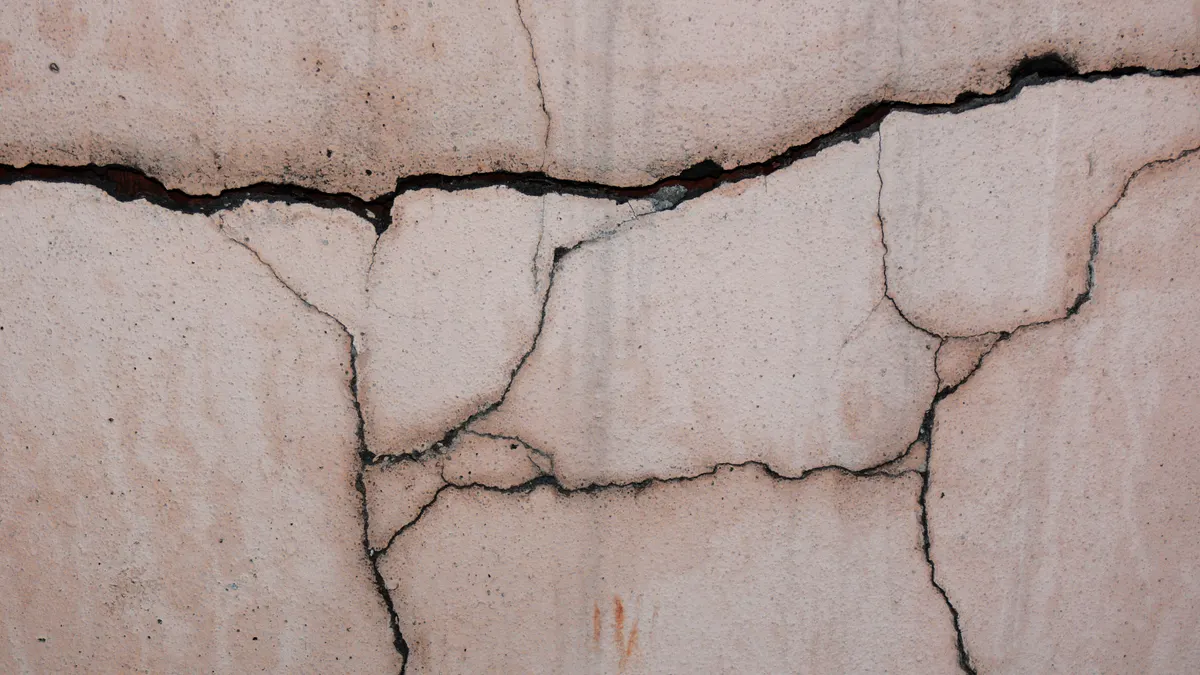
Foundation movement is the change in position, level, or shape of a foundation relative to the soil and the rest of the structure. The important distinction is between movement the building can tolerate and movement that changes how loads travel through the frame.
Uniform settlement is usually the least alarming form. A house that drops a little bit everywhere may still stay square if the movement is even. Differential settlement is more serious because one part of the foundation moves more than another. That creates rotation, bending, and racking. A 1/4-inch change across one bay can matter more than a 1-inch drop that happens evenly over a long span.
The movement also has direction. Vertical settlement is not the same as lateral displacement. A wall pushed sideways by soil pressure behaves differently from a footing that sinks because the soil beneath it lost support. Heave is the opposite of settlement: the ground lifts the foundation, often in expansive clays or where freezing and moisture changes alter soil volume.
A generic article often stops at “cracks mean settlement.” That is too blunt to be useful. A stair-step crack in masonry, a diagonal crack above a window, and a gap at a trim joint can all point to different mechanisms. The job is to identify the pattern, not just the crack.
To keep that diagnosis grounded, start with the load path. Roof and floor loads travel through walls, columns, beams, and footings into the soil. If the soil changes shape, the structure above it changes shape too. That is why foundation movement is really a soil-structure problem, not a concrete-only problem.
Why foundation movement happens
Foundation movement happens when the soil under or around the structure changes in strength, moisture, or volume faster than the foundation can accommodate. That can occur during construction, after a storm, over many seasons, or after years of drainage problems.
The most common cause is differential moisture change in soil. Expansive clays shrink when they dry and swell when they get wet. The U.S. Geological Survey has long described clay mineral swelling as a major source of ground movement in many regions. In practical terms, this means one corner of a house can rise or drop while another stays put. That is the setup for cracked masonry, sloping floors, and stuck openings.
Poor drainage is another major driver. Downspouts that discharge too close to the house, negative grading, broken gutters, and surface runoff can soften soil near one side of the foundation. On the other hand, prolonged drying near large trees can pull moisture from clay soils and cause localized shrinkage. The soil does not need to fail everywhere; one damp side and one dry side are enough to distort the structure.
Soil consolidation matters too. Fill that was not compacted well during site work can compress over time, especially under new loads. New additions are a classic example: the old foundation stays relatively stable while the added portion settles because the underlying fill behaves differently.
There is also construction-related movement. Footings that are undersized for the soil, reinforcement that is inadequate for the span, or a slab poured on weak subgrade can all create early movement. In colder climates, frost heave can lift shallow elements if the foundation depth does not match local freeze conditions. ASCE guidance on geotechnical and structural design emphasizes that soil conditions must match the foundation system, not the other way around.
The important point is that the same visible symptom can come from very different causes. A wall crack does not tell you whether the issue is drainage, clay, fill, frost, or overload. That is why the fix should follow the cause, not the crack.
How structural behavior changes when the foundation moves
Foundation movement changes structural behavior by altering geometry, stiffness, and load distribution. Once that happens, the structure stops behaving like the one the plans described.
The first effect is rotation. If one part of a footing settles more than another, beams and walls tilt. That tilt forces gravity loads to act off-center, which increases stress in some members and reduces it in others. The building may still stand, but it is no longer sharing loads evenly.
The second effect is racking. A rectangular frame prefers to stay rectangular. When one corner drops or one side rises, the rectangle tries to become a parallelogram. That is when doors go out of square, drywall cracks at corners, and window frames twist. Racking is especially visible in light-framed wood structures because the framing is flexible enough to show the movement before a brittle finish does.
The third effect is bending. Foundations and slabs are designed to support loads with limited deflection. When soil support varies, the concrete bends. Concrete handles compression well but resists tension poorly, so tensile zones crack first. In reinforced concrete, steel can carry some of that tension, but only within the limits of the design.
The fourth effect is load redistribution. If one bearing point settles, adjacent supports pick up more load. That can overstress beams, lintels, columns, or masonry piers. What looks like a small foundation issue can become a roof or wall problem because the load path has shifted.
This is why the symptom list matters. Hairline shrinkage cracks in drywall are usually cosmetic. A sloping floor combined with doors that latch badly and stair-step masonry cracks tells a much more structural story. The building is not just cracking; it is changing shape under altered support.
How do I tell settlement from structural damage?
Settlement is usually a foundation-level movement pattern; structural damage is the consequence when that movement distorts the frame, envelope, or load-bearing members. The difference is not whether a crack exists, but whether the building is still behaving within tolerances.
Settlement tends to show up as gradual, repeatable changes: a floor that slopes, trim gaps that widen on one side, or cracks that appear near openings and stay relatively stable. Structural damage becomes more likely when movement is uneven, progressive, or paired with visible distortion. A door that suddenly won’t close, a beam that sags, or a foundation wall that bows inward points beyond cosmetic settlement.
Crack shape helps, but only as part of the pattern. Vertical drywall cracks can come from normal shrinkage or minor movement. Diagonal cracks around windows often mean differential movement around an opening. Stair-step cracks in brick or block masonry often follow movement in the support below. Horizontal cracks in a foundation wall are more serious because they can indicate lateral soil pressure or wall bending.
One useful field rule is this: if the building still closes, drains, and aligns the same way year after year, the issue may be stable settlement or an old movement event. If the condition is changing over months, the problem is active. Movement that is active deserves more concern than movement that happened once and stopped.
The mistake many people make is treating every crack as proof of a structural emergency, when the safer approach is to compare the crack with the rest of the building and, if needed, consult a structural engineer or qualified foundation professional. The opposite mistake is worse: assuming all movement is cosmetic when the structure is actually losing support. A structural engineer uses elevation readings, crack mapping, and soil context to separate those two cases. The International Association of Certified Home Inspectors and the American Society of Civil Engineers both emphasize that pattern and progression matter more than a single visible defect.
The real difference between settlement, heave, and lateral pressure
Settlement moves a foundation downward, heave pushes it upward, and lateral pressure bends or shifts it sideways. Those three mechanisms look similar from inside a house, but the remedy changes completely.
Settlement is often linked to weak support, compression of fill, or loss of bearing capacity. It usually produces sloping floors and downward cracking at stress points. If the soil below the footing is the issue, solutions may include underpinning, compaction grouting, or drainage correction depending on the cause and scale.
Heave is common in expansive soils, frost-prone regions, and places where moisture enters beneath a slab or footing edge. It can create reverse symptoms: buckling floors, lifted slabs, and doors that bind because the floor is rising unevenly. A repair that simply “pushes the foundation back down” can fail if the soil is still expanding.
Lateral pressure comes from the side, not the bottom. Retaining walls, basement walls, and buried foundation walls can bow inward under saturated soil loads. This is a different structural problem. A wall may be intact at the footing but fail in bending through the middle, which means wall anchors, bracing, drainage, or wall replacement may be needed rather than vertical support work.
A useful way to think about it is by direction of force. Downward problems are usually support problems. Upward problems are usually volume or freeze problems. Sideways problems are usually earth-pressure problems. A generic repair plan that ignores direction is how money gets wasted.
What the evidence looks like on site
The strongest evidence of problematic movement is not one crack. It is a pattern across the structure, the site, and time.
Inside, look for floors that slope in a consistent direction, gaps at baseboards, plaster or drywall cracks that repeat near doors and windows, and doors or windows that stick in the same zone. In masonry homes, note whether cracks follow mortar joints in a stair-step pattern or run diagonally from opening corners.
Outside, inspect for separated trim, displaced steps, tilted porches, cracked stoops, and gaps where additions meet the main structure. Check whether the soil pulls away from the foundation during dry periods or stays saturated near downspouts during wet periods. A building with one wet corner and one dry corner is a building with uneven soil conditions.
Measurement matters more than impressions. A simple 4-foot level can reveal slope. A crack gauge or dated photos can show whether a crack is changing. Elevation survey data from a contractor or engineer is stronger still because it can map the pattern across the entire footprint. If the movement is small but active, that trend is often more important than the absolute size.
The soil itself is part of the evidence. Clay that becomes sticky when wet and hard when dry behaves differently from sandy soil or engineered fill. A cracked slab over expansive clay needs a different diagnosis than a cracked slab over compacted gravel. The U.S. Geological Survey, along with ASCE geotechnical guidance, is useful background when the question is how soil behavior drives movement.
The generic advice to “watch it for six months” can be useful only if the movement is clearly minor and there are no signs of structural distress. If the door frame is twisting, the wall is bowing, or the slope is worsening, waiting is not a plan.
The honest side-by-side
A shallow crack repair wins for cosmetic damage, while underpinning wins for true support loss. The right choice depends on whether the foundation is still carrying load evenly.
| Criteria | Simple patching / sealing | Structural repair / underpinning | Winner for this condition |
|---|---|---|---|
| Visible crack only, no slope | Often appropriate for finish cracks and minor sealant gaps | Usually unnecessary | Patching |
| Uneven floor elevation | Does not correct the cause | Addresses lost support or rotation | Structural repair |
| Crack keeps widening over time | Temporary at best | Can arrest the movement if the cause is found | Structural repair |
| Water management problem only | Not a cure, but may help appearance | Overkill if the structure is still stable | Patching plus drainage correction |
| Bow in basement or retaining wall | Does not solve lateral soil pressure | Wall bracing, anchors, or replacement may be required | Structural repair |
| Old, stable settlement | Reasonable if movement has stopped | May be unnecessary expense | Patching |
| Addition settled differently from original house | May hide symptoms, not fix the mismatch | Can address differential movement | Structural repair |
| Minor cosmetic distress in drywall | Most practical | Not justified by the symptom alone | Patching |
| Foundation wall is shifting, tilting, or rotating | Insufficient | Needed because geometry and load path have changed | Structural repair |
This comparison matters because foundation movement often gets treated like a surface problem when it is actually a support problem. Patching is useful when the structure is sound and the movement is old, slight, and stable. It is a bad answer when the frame is being distorted or the foundation is losing function.
The specific situations where one fix beats the other
Patching wins when the movement is old, small, and not progressing. That is common in interior finish cracks, isolated sealant failures, and minor cosmetic gaps around trim. If the floor is level enough, doors still operate, and no new distortion appears, a targeted repair is usually the sensible choice. The weakness is obvious: patching hides symptoms but does not address the soil or foundation, so it should not be mistaken for a structural remedy.
Structural repair wins when there is active movement, uneven settlement, or wall distortion. Underpinning, piers, wall anchors, carbon fiber reinforcement, or drainage correction can be the right answer depending on the mechanism. The advantage is that these methods target the cause, not just the crack. The drawback is cost, disruption, and the risk of choosing the wrong system if the diagnosis is poor.
A house with expansive clay and recurring seasonal movement usually needs more than paint and caulk. A basement wall showing horizontal cracking and inward bowing also needs more than sealant. In both cases, the repair has to match the force pattern. That is why the smartest money is spent on diagnosis first.
A homeowner who only wants the wall to look better may prefer a patch. A buyer who wants to understand the real risk should ask whether the movement is active, what the soil is doing, and whether the structure is still square. If the answer is no, cosmetic work is secondary.
For background on soil behavior and foundation design principles, the National Ready Mixed Concrete Association’s publications, the American Society of Civil Engineers, and the U.S. Geological Survey provide useful starting points. ASCE’s structural standards and geotechnical guidance are especially relevant when a repair proposal needs to be judged against actual load paths and soil conditions. For practical inspection context, the International Association of Certified Home Inspectors also offers guidance that helps distinguish cosmetic cracking from movement that deserves engineering review. For homeowner-facing structural information, USGS remains a credible source on clay soils and ground movement.
When to rethink the whole diagnosis
The diagnosis should change entirely if the movement is active, the wall is bowing, or the building has multiple symptoms that point in different directions. Those are not “wait and see” cases.
One exception is frost-related movement. In a cold climate, repeated winter heave can mimic settlement symptoms in spring. The real fix may involve foundation depth, drainage, and insulation strategy rather than just support correction.
Another exception is post-construction fill. If an addition or patio settles while the main house stays stable, the issue may be localized to the new work. That changes the scope and often the repair budget. It also means the original foundation may not need intervention.
A third exception is drainage-driven movement. If the slope problem appears after heavy rain and improves when water is redirected, drainage may be the primary fix. In that case, structural reinforcement may be premature unless movement continues after water control.
The fourth exception is old movement with no progression. A house can carry the scars of past settlement for decades without needing major work. If the crack is stable, the floor is stable, and the structure is still performing, expensive underpinning may not add value.
The point of these exceptions is not to soften the conclusion. It is to prevent the wrong repair. Foundation work becomes expensive fast, and the wrong method can lock in the mistake.
The verdict: what to do now
Choose simple patching and monitoring if the crack is small, the floor is still level enough, the doors still operate normally, and there is no sign the movement is getting worse. Choose structural repair if the movement is active, uneven, or changing the building’s shape, especially when you see slope, bowing, or racking. Neither if the problem is clearly soil-driven but has not been diagnosed yet; in that case, consult a structural engineer or qualified foundation specialist to identify the mechanism before any repair is sold, and use the same kind of professional review that ASCE and USGS guidance support.
That is the cleanest rule. Cosmetic damage can be repaired cosmetically. Structural movement cannot. The whole job is figuring out which one you are looking at before the wrong fix becomes the expensive one.
Drafted with AI; not yet reviewed by a person.